Kzee Home Spa | Massage at Home Dubai | Men and Women
Cupping Massage
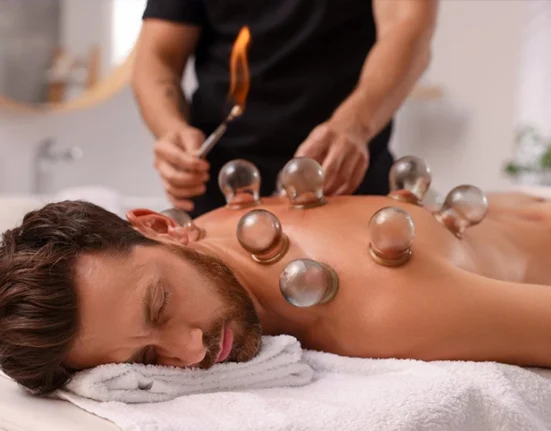
Cupping therapy is an ancient healing method that originated in China and the Middle East. Moreover, It involves creating a local suction on the skin using special cups. This suction is believed to draw blood to the surface, promoting circulation and encouraging the body’s natural healing processes.
How it Works

A practitioner places cups, made from materials like glass, plastic, or silicone, on the skin. While the suction can be created in a few ways:
Fire Cupping: A flame is briefly placed inside a glass cup to heat the air. As the air cools, it creates a vacuum that pulls the skin into the cup.
Manual/Mechanical Cupping: A handheld pump is used to create suction inside the cup after it’s placed on the skin.
Silicone Cupping: Flexible silicone cups are compressed by hand and then placed on the skin, creating a vacuum as they expand.
Also the cups are typically left in place for several minutes, and the suction can cause the skin to turn red or purple, resulting in the well-known circular bruises that often appear after a session. So, these marks are a normal side effect and usually fade within a few days.
Types of Cupping
There are several types of cupping, but the two most common are:
Dry Cupping: This is the most common form, where cups are placed on the skin to create suction without any incisions.
Wet Cupping (Hijama): This technique involves making small, superficial incisions on the skin before applying the cups. While the suction then draws out a small amount of blood and extracellular fluid. Also, this method is often associated with detoxification and is considered more invasive.
Additionally, some practitioners use “dynamic” or “moving” cupping, where oil is applied to the skin, and the cups are moved across the surface to create a massage-like effect.
Reported Benefits
While more high-quality research is needed to fully understand the effects of cupping, proponents and practitioners claim as well as it can provide a range of benefits, including:
Pain Relief: Cupping is often used to alleviate muscle pain, back pain, and headaches.
Improved Blood Flow: The suction effect is believed to increase circulation to the treated area, which may help with muscle relaxation and healing.
Reduced Muscle Tension: Cupping can help release tight muscles and reduce stiffness.
Stress Reduction: Many people find the therapy to be relaxing, which can help reduce stress and anxiety.
Other Conditions: Cupping is also used in traditional medicine to address a variety of other conditions, such as respiratory issues (like asthma), skin problems (like acne), and digestive disorders.